

Reports
Advancing Economic Development in the APEC Region: Best Practices for Smart Human–Machine Collaboration in the Heavy Steel Construction Industry
The Asia-Pacific Economic Cooperation (APEC) is a regional economic forum established in 1989 to leverage the growing interdependence of the Asia-Pacific.
The Asia-Pacific Economic Cooperation (APEC) is a regional economic forum established in 1989 to leverage the growing interdependence of the Asia-Pacific.
APEC ensures that goods, services, investment and people move easily across borders. Members facilitate this trade through faster customs procedures at borders; more favorable business climates behind the border; and aligning regulations and standards across the region.
APEC ensures that goods, services, investment and people move easily across borders. Members facilitate this trade through faster customs procedures at borders; more favorable business climates behind the border; and aligning regulations and standards across the region.
APEC has helped drive economic growth and cooperation across the Asia-Pacific by reducing trade barriers, improving the ease of doing business and strengthening connectivity among economies. These efforts have contributed to rising incomes, expanded trade and greater opportunities for businesses and communities across the region.
APEC has helped drive economic growth and cooperation across the Asia-Pacific by reducing trade barriers, improving the ease of doing business and strengthening connectivity among economies. These efforts have contributed to rising incomes, expanded trade and greater opportunities for businesses and communities across the region.
APEC brings together governments, businesses and stakeholders to collaborate on shared priorities. Explore opportunities to participate in events, contribute to initiatives and engage with APEC’s work across the region.
APEC brings together governments, businesses and stakeholders to collaborate on shared priorities. Explore opportunities to participate in events, contribute to initiatives and engage with APEC’s work across the region.

Manuals
•May 2020
Download Report
4MB
Published Under
Committee on Trade and Investment (CTI), Sub-Committee on Standards and Conformance (SCSC)
Accessed
2743
Pages
19
When the objective of strengthening integrated antimicrobial surveillance in the food chain among APEC economies were set, one of the key aspects to cover was to have laboratory techniques to measure the susceptibility to antibiotics in a harmonized and standardized way.One of the major outcomes of the project was to count with this technical information in a publication that is open and accessible for all APEC economies.
This laboratory guide contains well-known antimicrobial susceptibility techniques and that were shown in the workshop held in Chile in October 2018 to the APEC economies participants through demonstrative laboratory training modules.
Reports
Advancing Economic Development in the APEC Region: Best Practices for Smart Human–Machine Collaboration in the Heavy Steel Construction Industry
Proceedings
APEC Workshop on Shaping Digital Transformation in Accreditation
Manuals
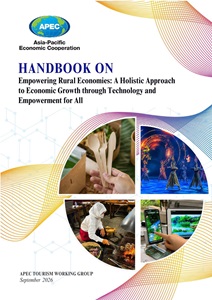
Empowering Rural Economies: A Holistic Approach to Economic Growth through Technology and Empowerment for All