

Reports
Advancing Economic Development in the APEC Region: Best Practices for Smart Human–Machine Collaboration in the Heavy Steel Construction Industry
The Asia-Pacific Economic Cooperation (APEC) is a regional economic forum established in 1989 to leverage the growing interdependence of the Asia-Pacific.
The Asia-Pacific Economic Cooperation (APEC) is a regional economic forum established in 1989 to leverage the growing interdependence of the Asia-Pacific.
APEC ensures that goods, services, investment and people move easily across borders. Members facilitate this trade through faster customs procedures at borders; more favorable business climates behind the border; and aligning regulations and standards across the region.
APEC ensures that goods, services, investment and people move easily across borders. Members facilitate this trade through faster customs procedures at borders; more favorable business climates behind the border; and aligning regulations and standards across the region.
APEC has helped drive economic growth and cooperation across the Asia-Pacific by reducing trade barriers, improving the ease of doing business and strengthening connectivity among economies. These efforts have contributed to rising incomes, expanded trade and greater opportunities for businesses and communities across the region.
APEC has helped drive economic growth and cooperation across the Asia-Pacific by reducing trade barriers, improving the ease of doing business and strengthening connectivity among economies. These efforts have contributed to rising incomes, expanded trade and greater opportunities for businesses and communities across the region.
APEC brings together governments, businesses and stakeholders to collaborate on shared priorities. Explore opportunities to participate in events, contribute to initiatives and engage with APEC’s work across the region.
APEC brings together governments, businesses and stakeholders to collaborate on shared priorities. Explore opportunities to participate in events, contribute to initiatives and engage with APEC’s work across the region.

Proceedings
•November 2020
Download Report
4MB
Published Under
Committee on Trade and Investment (CTI)
Accessed
3274
Pages
37
The workshop was designed to complement studies to support the final reviews of both Manufacturing-Related Services Action Plan (MSAP) and Environmental Services Action Plan (ESAP)and provide critical insights into how APEC could support more seamless trade in services vital to economic recovery and prosperity.
Through presentations, researchers described the progress achieved under ESAP and MSAP and shared results of studies relating to trade negotiations, service categorizations, domestic regulations, and capacity building measures. Distinguished expert speakers provided the audience with insights into ongoing initiatives within international organizations, existing cooperation between APEC economies, experiences of firms delivering relevant services, and trends regarding the scale and form of trade in these services.
The MSAP panel discussion was centered around efforts within APEC to foster collaboration on the delivery of manufacturing-related services. An underlying theme of the ESAP panel was how regulatory authorities in APEC economies could optimize domestic regulations, particularly licensing and approval measures, to create environments more conducive to trade.
Reports
Advancing Economic Development in the APEC Region: Best Practices for Smart Human–Machine Collaboration in the Heavy Steel Construction Industry
Proceedings
APEC Workshop on Shaping Digital Transformation in Accreditation
Manuals
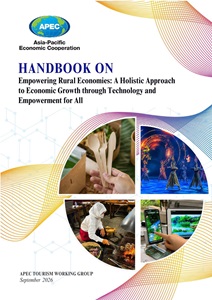
Empowering Rural Economies: A Holistic Approach to Economic Growth through Technology and Empowerment for All