Manuals
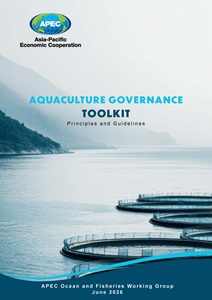
Aquaculture Governance Toolkit - Principles and Guidelines
The Asia-Pacific Economic Cooperation (APEC) is a regional economic forum established in 1989 to leverage the growing interdependence of the Asia-Pacific.
The Asia-Pacific Economic Cooperation (APEC) is a regional economic forum established in 1989 to leverage the growing interdependence of the Asia-Pacific.
APEC ensures that goods, services, investment and people move easily across borders. Members facilitate this trade through faster customs procedures at borders; more favorable business climates behind the border; and aligning regulations and standards across the region.
APEC ensures that goods, services, investment and people move easily across borders. Members facilitate this trade through faster customs procedures at borders; more favorable business climates behind the border; and aligning regulations and standards across the region.
APEC has helped drive economic growth and cooperation across the Asia-Pacific by reducing trade barriers, improving the ease of doing business and strengthening connectivity among economies. These efforts have contributed to rising incomes, expanded trade and greater opportunities for businesses and communities across the region.
APEC has helped drive economic growth and cooperation across the Asia-Pacific by reducing trade barriers, improving the ease of doing business and strengthening connectivity among economies. These efforts have contributed to rising incomes, expanded trade and greater opportunities for businesses and communities across the region.
APEC brings together governments, businesses and stakeholders to collaborate on shared priorities. Explore opportunities to participate in events, contribute to initiatives and engage with APEC’s work across the region.
APEC brings together governments, businesses and stakeholders to collaborate on shared priorities. Explore opportunities to participate in events, contribute to initiatives and engage with APEC’s work across the region.
Reports
•January 2024
Download Report
645KB
Published Under
APEC Secretariat, APEC Policy Support Unit
Accessed
2327
Pages
12
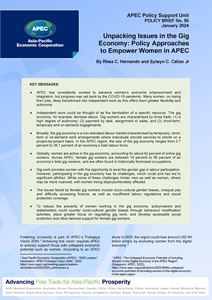
Recognising the economic gravity that women represent, APEC has been consistently working to advance women’s economic empowerment and integration. However, progress in this area was set back by the COVID-19 pandemic, which led many women to transition to independent work that offers flexibility and autonomy. One example is the gig economy that could be seen as a non-standard labour market characterised by temporary, short-term or on-demand work arrangements where individuals, often referred to as gig workers, provide services to clients on a project-by-project basis.
The gig economy varies in size across APEC economies, with women constituting about 19 percent to 56 percent of economies’ total gig workers. Unfortunately, women in online gig work are more inclined to participate in historically feminised occupations, such as clerical and data entry and caregiving. While gig work offers a chance to narrow the gender gap in gainful employment, barriers that affect women disproportionately such as socio-cultural gender biases, discrimination and harassment, unequal pay, and insufficient regulations make this challenging. Indeed, the role of policy should be to reduce the precarity of women working in the gig economy. Thus, policymakers are urged to address these challenges by promoting behaviour modification to overcome socio-cultural gender biases, playing an active role in regulating gig work, and providing accessible social protection or alternative support mechanisms. These policy initiatives would align with APEC’s goal of empowering women in this changing economic landscape.