

Proceedings
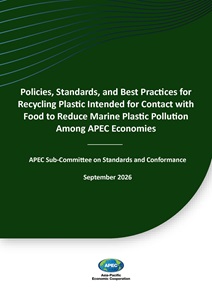
Policies, Standards, and Best Practices for Recycling Plastic Intended for Contact with Food to Reduce Marine Plastic Pollution Among APEC Economies
The Asia-Pacific Economic Cooperation (APEC) is a regional economic forum established in 1989 to leverage the growing interdependence of the Asia-Pacific.
The Asia-Pacific Economic Cooperation (APEC) is a regional economic forum established in 1989 to leverage the growing interdependence of the Asia-Pacific.
APEC ensures that goods, services, investment and people move easily across borders. Members facilitate this trade through faster customs procedures at borders; more favorable business climates behind the border; and aligning regulations and standards across the region.
APEC ensures that goods, services, investment and people move easily across borders. Members facilitate this trade through faster customs procedures at borders; more favorable business climates behind the border; and aligning regulations and standards across the region.
APEC has helped drive economic growth and cooperation across the Asia-Pacific by reducing trade barriers, improving the ease of doing business and strengthening connectivity among economies. These efforts have contributed to rising incomes, expanded trade and greater opportunities for businesses and communities across the region.
APEC has helped drive economic growth and cooperation across the Asia-Pacific by reducing trade barriers, improving the ease of doing business and strengthening connectivity among economies. These efforts have contributed to rising incomes, expanded trade and greater opportunities for businesses and communities across the region.
APEC brings together governments, businesses and stakeholders to collaborate on shared priorities. Explore opportunities to participate in events, contribute to initiatives and engage with APEC’s work across the region.
APEC brings together governments, businesses and stakeholders to collaborate on shared priorities. Explore opportunities to participate in events, contribute to initiatives and engage with APEC’s work across the region.
Proceedings
•February 2024
Download Report
959KB
Published Under
SOM Steering Committee on Economic and Technical Cooperation (SCE), Energy Working Group (EWG)
Accessed
1534
Pages
33
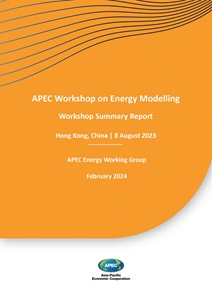
This project aimed to analyze different energy modelling approaches and identify their strengths and limitations. This analysis considered factors such as the complexity of model updates, the level of detailed data required, and the impact of technological advancements on adopting new forms of renewable energy. The objective was to support the delivery of APEC goals.
To enhance knowledge sharing and capacity building, a one-day workshop was organized. During the workshop, participants shared current and best practices, presented case studies, and provided recommendations on adopting energy modelling. The Workshop Summary Report is a document that summarizes the key insights and information shared during the workshop. These documents serve as valuable references for APEC economies to use energy modelling tools for monitoring and forecasting energy consumption trends and assessing the effectiveness of policy implementation in achieving APEC goals.
Proceedings
Policies, Standards, and Best Practices for Recycling Plastic Intended for Contact with Food to Reduce Marine Plastic Pollution Among APEC Economies
Reports
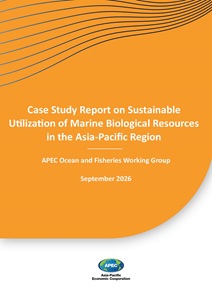
Case Study Report on Sustainable Utilization of Marine Biological Resources in the Asia-Pacific Region
Proceedings
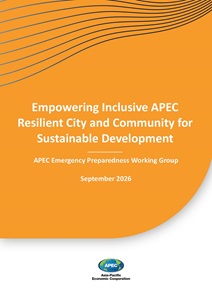
Empowering Inclusive APEC Resilient City and Community for Sustainable Development