

Macao, People's Republic of China
•10 July 2026
Chair’s Statement of the 13th APEC Tourism Ministerial Meeting
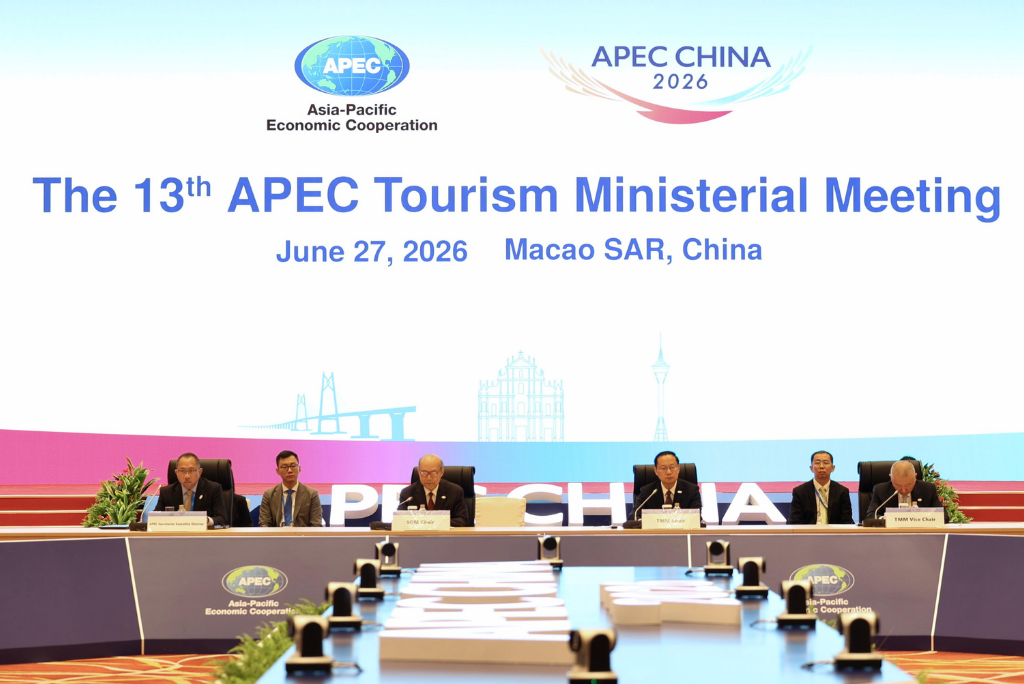
Chair’s Statement of the 13th APEC Tourism Ministerial Meeting
27 June 2026 | Macao SAR, China
1. The APEC Tourism Ministers and senior representatives, met at the 13th APEC Tourism Ministerial Meeting (TMM13) in Macao SAR, China, on 27 June 2026. The meeting was chaired by H.E. Mr. Sun Yeli, Minister of Culture and Tourism of the People’s Republic of China.1
2. To achieve the APEC Putrajaya Vision 2040, including through the implementation of the Aotearoa Plan of Action to build an open, dynamic, resilient and peaceful Asia-Pacific community by 2040 for the prosperity of all our people and future generations, under the theme of APEC China 2026, “Building an Asia-Pacific Community to Prosper Together”, with a focus on the 2026 priorities of “Openness, Innovation, Cooperation”, we convened under the theme “Digital Innovation, Collaborative Empowerment: Leveraging Tourism for an Asia-Pacific Community”, to discuss how digital innovation, as well as enhanced cooperation, can empower the tourism industry across the region. Harnessing the power of innovation, we aim to advance the tourism sector in the Asia-Pacific region.
3. We reaffirm the vital role of the tourism sector in promoting economic growth and regional prosperity. We recognize that technology is increasingly shaping tourism development across the region and strengthening the sector as an important pillar of economic growth in the Asia-Pacific region.
4. We recognize that digital technologies including Artificial Intelligence (AI) are creating unprecedented opportunities across the tourism sector. As a major driver of global tourism transformation and a leading region for digital innovation, the Asia-Pacific region continues to contribute to the global tourism landscape. We recognize the important role of digital platforms in accelerating tourism development, particularly by creating new opportunities for Micro, Small and Medium-sized Enterprises (MSMEs) to integrate into tourism value chains. We are ready to advance digital transformation in tourism, consistent with the APEC AI Initiative (2026-2030), so that digital technologies and capabilities deliver benefits to all.
5. We believe that digital technologies can enhance the efficiency, capacity, productivity and quality of the tourism sector across the region, from product development and marketing to service delivery. Digital capabilities can foster innovation, strengthen professional skills and improve service standards among tourism practitioners across the region. Digital development can improve the accessibility and convenience of tourism services, enhance visitor experiences and satisfaction, and promote tourism development outcomes for both visitors and host communities.
6. APEC members emphasize the importance of addressing the impact of digital innovation on the tourism workforce and of encouraging technological progress that supports economic opportunities, private sector job growth, lifelong learning and skills development. We recognize the need to address digital divides and to empower participation for all, including those with limited digital literacy. We encourage economies to promote accessibility across the tourism value chain—including transport, accommodation, attractions, information services, and digital platforms. We remain committed to ensuring that the benefits of tourism development led by digital innovation are shared by all. We are committed to supporting MSMEs’ participation in regional and global tourism markets by enhancing digital capacity and facilitating their access to and use of relevant data. We also acknowledge that innovation, digitalization, and an enabling business environment can help promote the transition of tourism enterprises into the formal economy, consistent with the Lima Roadmap to Promote the Transition to the Formal and Global Economies (2025–2040).
7. APEC members recognize the critical role of fully unlocking the economic potential of sustainable tourism, in line with the Bangkok Goals on Bio-Circular-Green (BCG) Economy. We will strengthen policy exchanges to promote data-driven decision-making. We will strengthen the capacities of the tourism workforce and local stakeholders by equipping them with the skills and competencies needed to implement resilient, efficient and effective practices and respond to emerging challenges, while encouraging the adoption of such practices across tourism value chains, including circular economy, waste prevention and reduction, environmental protection, and conservation of biodiversity at key destinations. We also encourage public-private and multi-stakeholder collaboration to promote tourism by innovation and investment in this regard.
8. We recognize the role of local communities, including Indigenous Peoples as appropriate, as integral contributors to tourism development, and support community-based tourism initiatives and the preservation of cultural and natural heritage including by leveraging the economic potential of these tourism assets. To this end, we encourage the use of digital technologies to promote creative industries and support preservation of cultural heritage of local communities. We commit to protecting intellectual property rights to support innovation, creativity and brand protection in tourism through relevant policies and programs, including by addressing challenges faced by innovators, creators, and brand owners.
9. We encourage collaboration on tourism talent development programmes. With a focus on enhancing the professional skills of tourism practitioners, we will cultivate tourism talent to adapt to the digital era. We will support the meaningful engagement of all in tourism development. Through policy discussion and collaborative mechanisms, we will work with the private sector and other relevant stakeholders to further enable young people to pursue entrepreneurship in the tourism sector. We encourage the voluntary exchange of best practices to promote digital literacy that can help facilitate tourism employment.
10. APEC members encourage economies to pursue policies and approaches that promote responsible tourism practices, conserve biodiversity, enhance resource efficiency, and encourage investment in resource-efficient infrastructure. Economies are also encouraged to support efforts to enhance the tourism consumption experience for visitors, including through promoting interoperability and voluntary cooperation in cross-border payments, reducing costs and time associated with cross-border transactions, and strengthening safeguards for privacy and personal data protection.
11. We recognize the importance of tourism in promoting people-to-people connectivity across our region, and note work done in this regard. This includes the APEC Connectivity Blueprint (2015-2025), which was aimed at strengthening physical, institutional and people-to-people connectivity in the APEC region. We support the strengthening of transport connectivity, including enhancing air connectivity as a key driver of tourism sector growth. We underscore the importance of broadening air connectivity between economies, including the development of new routes and direct connections, where commercially viable and consistent with applicable agreements.
12. To promote travel facilitation in the region, including to make it more secure and seamless, we encourage efficient and positive visitor experiences at entry and exit, including, where appropriate, through the use of digital solutions such as electronic visas. We also encourage economies to enhance the competitiveness and resilience of Meetings, Incentives, Conferences and Exhibitions (MICE) tourism through digital innovation and improved infrastructure.
13. To exchange experiences and deepen cooperation on the application of digital technologies, economies are encouraged to promote the voluntary sharing of best practices in technological innovation in the tourism sector across the region. Economies may strengthen experience-sharing and cooperation on issues such as destination management and in other relevant areas. We also encourage the use of data, digital platforms and AI to enhance visitor experience, including through the analysis of visitor preferences, travel patterns and destination demand.
14. We express our gratitude to APEC's observer organizations and the private sector for their contributions and insights, and recognize the significance of their perspectives in our discussions.
15. We extend our appreciation to the Tourism Working Group (TWG), and member economies for their sustained efforts and positive contributions to APEC tourism cooperation. We recognize that TWG meetings serve as a vital platform for economies to exchange best practices and foster policy dialogue.
16. We believe that tourism plays a fundamental role in strengthening people-to-people connections, thereby laying a solid foundation for regional cooperation. We look forward to translating this Statement into concrete actions through continued dialogue and cooperation, thereby contributing to regional economic prosperity and the well-being of all.
17. We express our sincere appreciation to China for hosting the meeting in Macao SAR and for their warm hospitality.
18. We look forward to convening again in Mexico in 2028.
1 Members discussed on promoting tourism in the Asia-Pacific region while varying views were also expressed during the meeting.